The Airport Security System
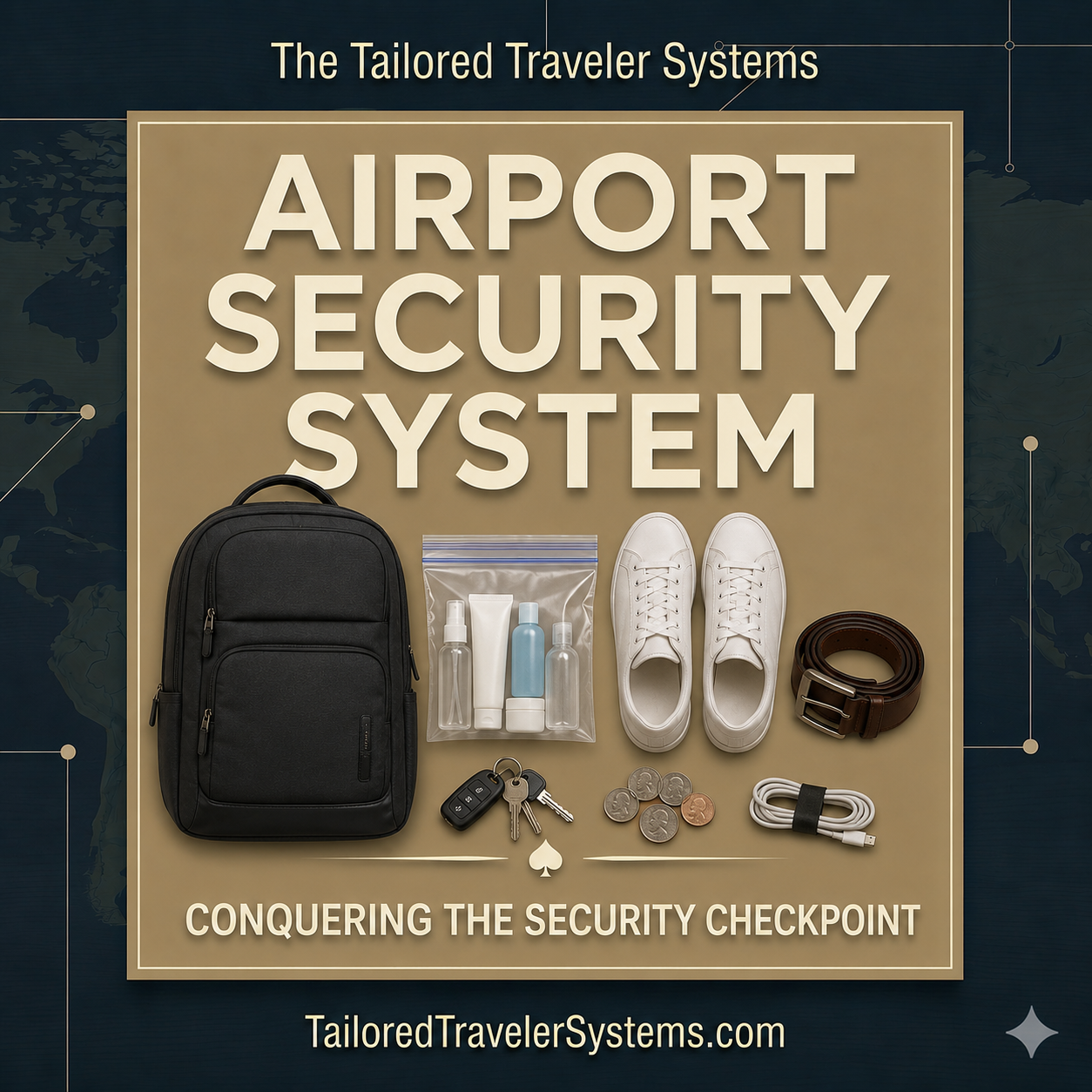
The Airport Security System: Precision Logistics for the Checkpoint
Security checkpoints are the highest point of friction in the modern travel experience. The average traveler scrambles for their ID, digs through bags, and empties pockets at the last second—creating unnecessary stress.
A systematic traveler does not react at the checkpoint; they execute a pre-planned transition. This guide provides the Tailored Traveler Systems framework for navigating security with precision, minimizing delays, and ensuring you move through the process with professional efficiency.
1. The Core Framework: The 3-1-1 Rule
To maintain a frictionless transit, you must adhere strictly to TSA standards. Failure to follow these metrics leads to manual bag searches and unnecessary delays.
- 3.4 Ounces (100 ml) Limit: Every individual liquid container must be 3.4 ounces or less. TSA measures container capacity, not the product volume. Even if a 6-ounce bottle is nearly empty, it will be confiscated.
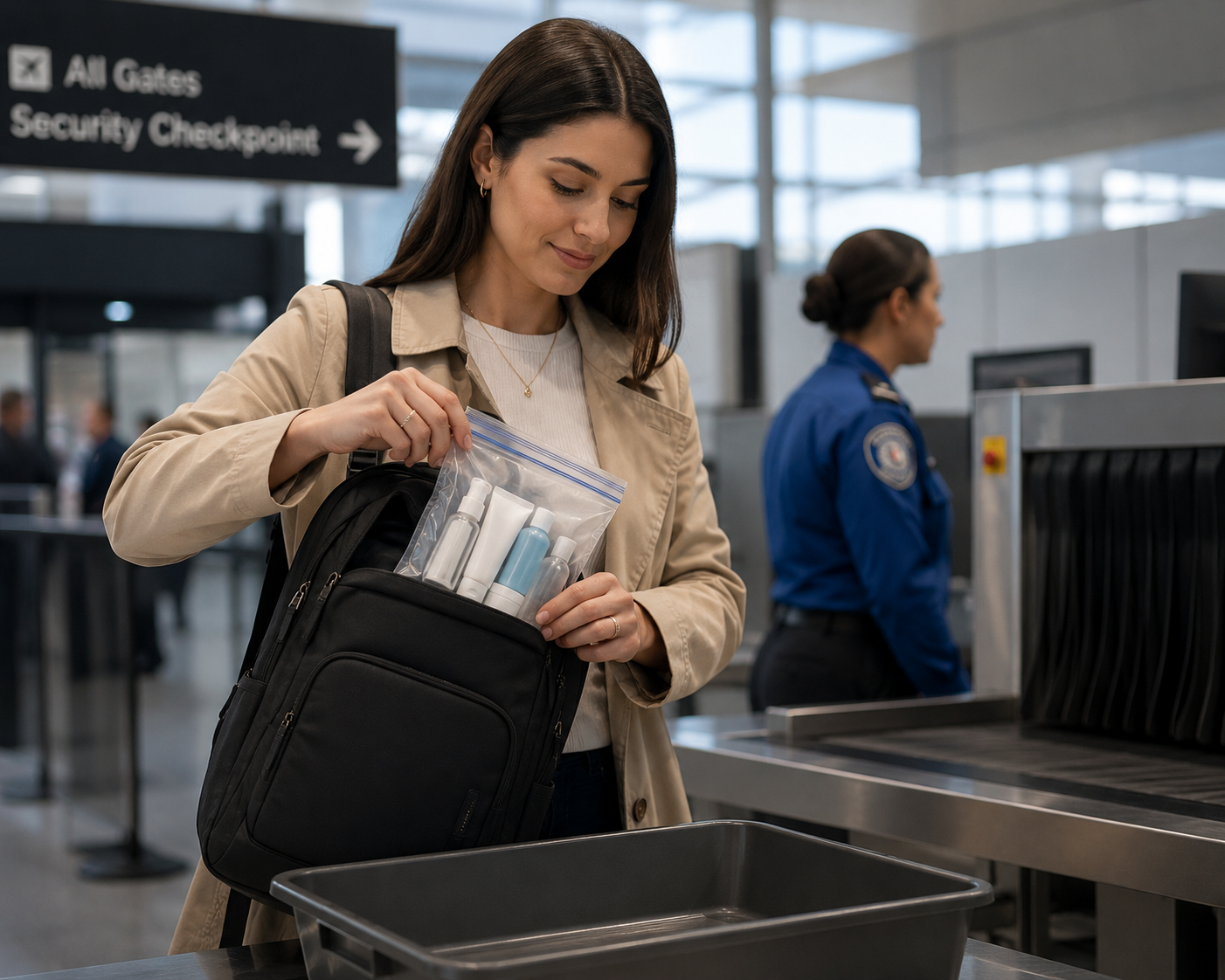
- 1 Quart-Sized Bag: All liquids must fit comfortably inside a single, clear, resealable, quart-sized plastic bag or a TSA certified liquids bag.
- 1 Bag Per Passenger: You are allowed exactly one liquids bag. You cannot combine your toiletries with a travel companion’s allowance.
2. The Logistics of Container Selection
Standard plastic zip-top bags are functional, but the systematic traveler prioritizes durability and organization.
- Recommended Gear: Invest in a high-quality, structured, clear, reusable TSA-compliant toiletry pouch. Structured pouches hold more items without bulging and are significantly more durable than disposable alternatives. You can find the one I use here.
- Optimal Placement: Your liquids bag should be one of the last items packed and the first item accessible. Store it in your backpack’s front or secondary exterior pocket. This allows for retrieval in one smooth motion, rather than digging through your carry-on while other travelers wait.
3. Defining "Liquid": What Must Be Declared
Many travelers trigger searches by failing to categorize semi-solids as liquids. If it can be spread, pumped, squeezed, sprayed, poured, or smeared, it belongs in your liquids bag:
- Toiletries: Shampoo, conditioner, body wash, lotion, and sunscreen.
- Cosmetics: Liquid foundation, concealer, mascara, and liquid lipstick.
- Consumables: Peanut butter, jam, hummus, yogurt, and creamy dips.
- Personal Care: Toothpaste, hair gel, and gel deodorant.
4. Exceptions and Exemptions
Certain items bypass the 3.4-ounce restriction, but they require proactive management:
- Medications: Liquid prescription and necessary over-the-counter medications are permitted in reasonable quantities.
- Baby Supplies: Breast milk, baby formula, toddler drinks, and baby food are exempt when traveling with an infant.
- The Protocol: Proactively declare these items to the TSA officer and separate them from your other belongings for specialized screening.
5. The Security Checkpoint Transition System
Speed is built before you reach the conveyor belt.
Dress for Efficiency
- Footwear: Choose slip-ons, loafers, or travel shoes with minimal lacing.
- Belts: Avoid large metal buckles; consider non-metal travel belts or skipping one entirely.
- Accessories: Store watches and chunky jewelry in your personal item before entering the queue.
The Pocket Audit
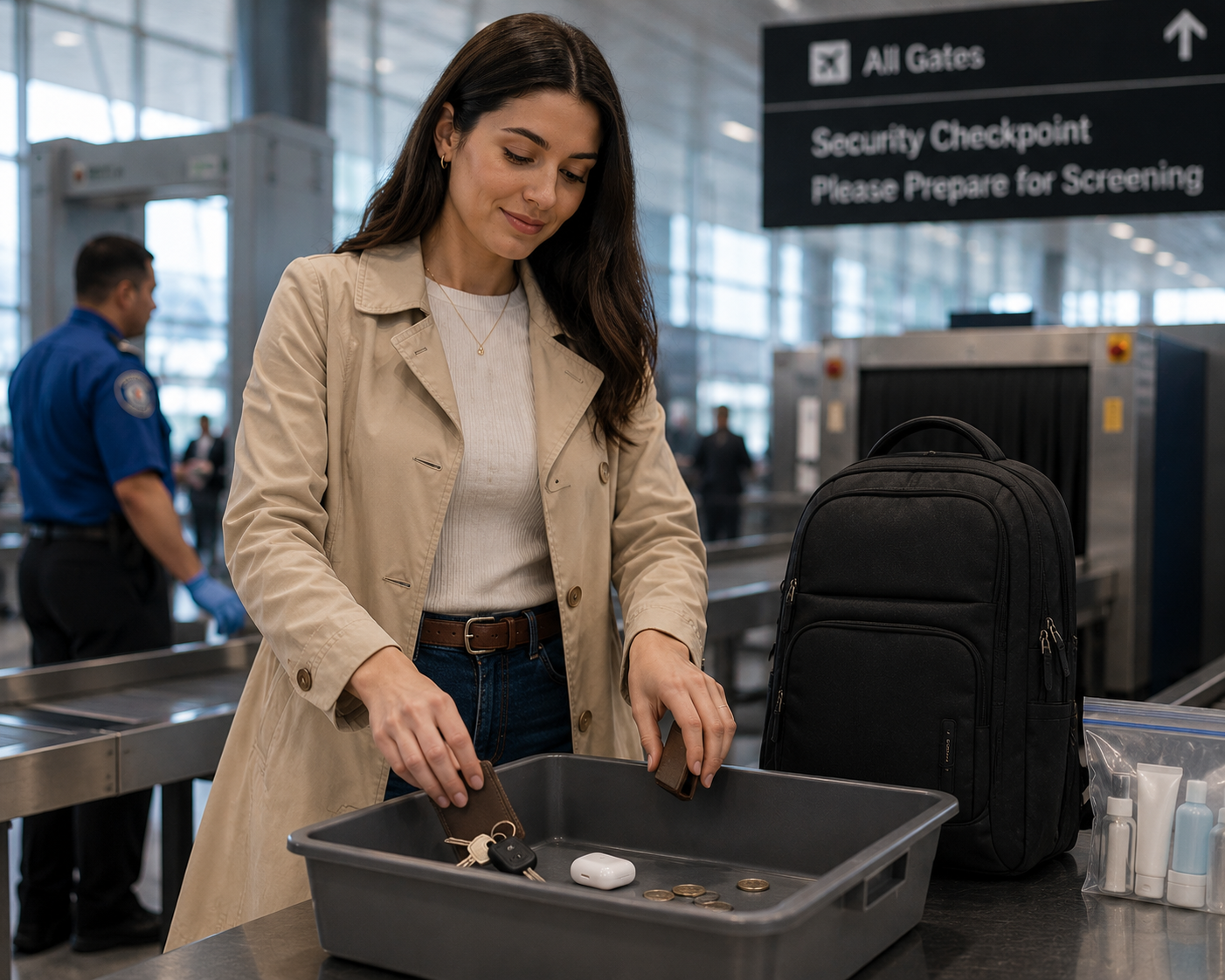
Remove all objects—phone, wallet, keys, coins, earbuds, and chargers—from your pockets before entering the security queue. Place these inside your personal item to reduce alarms and rescan requirements.
6. The Bin Loading Sequence
We load bins in a consistent, repeatable sequence:
- Bin One: Shoes, belt, jacket, and backpack which includes pocket contents in the front pocket.
- Bin Two (If Required): Laptop, tablet, and large electronics.
- Conveyor Belt: Carry-on suitcase.
Consistency creates speed. When your belongings emerge, everything is organized logically, allowing you to move away from the conveyor without creating a bottleneck.
7. Repack Away From the Conveyor
Never reorganize at the end of the scanner. Collect your belongings, verify you have everything, and move to a nearby bench or repacking area. The end of the conveyor is a retrieval zone—not a repacking station.
8. Accelerating with TSA PreCheck and CLEAR
For the frequent traveler, the ultimate way to go through security is trusted traveler status.
- TSA PreCheck: Allows you to keep on your shoes, belt, and a light jacket, as well as electronics in your bag.
- CLEAR: Verifies identity using biometrics. When paired with PreCheck, this provides the fastest airport security experience available.
9. The Final Audit: Checked vs. Prohibited
- Checked Baggage: Generally, there are no volume limits. This is the optimal place for full-sized perfumes, luxury skincare, and high-volume toiletries.
- Strictly Prohibited: Toxic chemicals, bleach, pesticides, flammable fuels, and high-proof alcohol (70% ABV or higher) are banned from both carry-on and checked bags.
The Tailored Traveler Systems Security Checklist
Travel should never feel chaotic. It should feel tailored.
Affiliate Disclosure
This post contains affiliate links. If you purchase through these links, The Tailored Traveler Systems may earn a small commission at no additional cost to you. We only recommend travel tools that we genuinely believe add value to your experience, helping us continue to build free resources for the modern traveler.