
The Airport Intelligence System

The Airport Intelligence System: The 15-Minute Framework That Eliminates Airport Chaos
Most airport advice focuses on one thing: getting through security.
But what happens after security may have an even bigger impact on your travel experience.
The average traveler reaches their gate, drops into the nearest chair, and waits. Hours later, they're scrambling when a gate changes, searching frantically for food, or discovering too late that the airport lounge was just two concourses away.
Systematic travelers do something different.
They execute an Airport Intelligence System.
This simple 15-minute framework transforms the airport from a stressful holding pen into a controlled, efficient environment.
Why This System Matters
Airports are dynamic ecosystems. Gates change. Restaurants close unexpectedly. Charging stations fill up.
Weather delays ripple through terminals.
A traveler who gathers information immediately gains a significant advantage over everyone else.
Think of it as conducting reconnaissance before settling in.
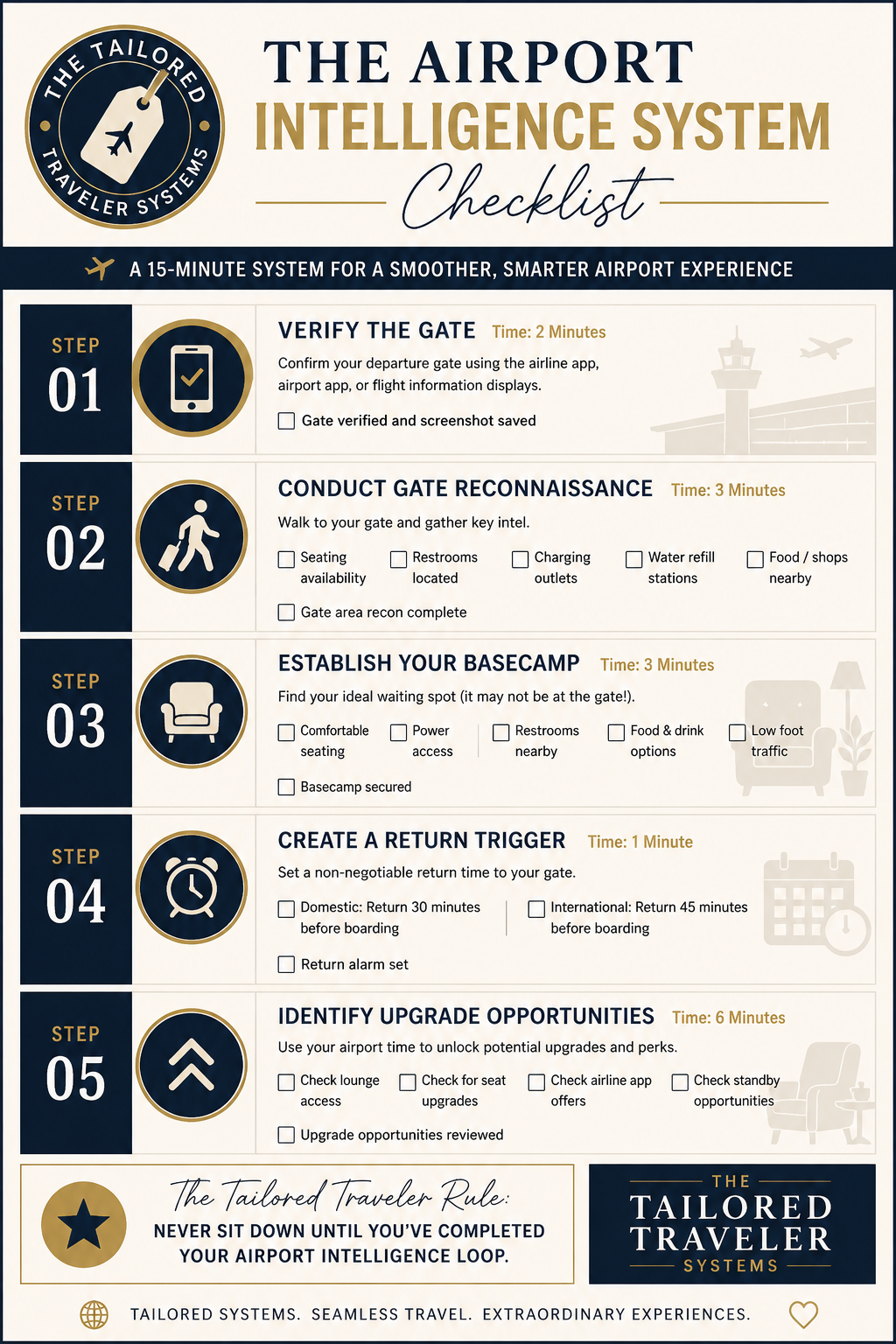
The Tailored Traveler Airport Intelligence System
Step 1: Verify the Gate (2 Minutes)
Never trust the information printed on your boarding pass.
The first action after clearing security should always be to verify your departure gate using:
- The airport's official app
- Airline app
- Flight information displays
Even if your gate hasn't changed, knowing exactly where it is allows you to make informed decisions about how much time you truly have.
Pro Tip: Screenshot your boarding pass and gate information. Airport Wi-Fi and cellular service can become unreliable during peak travel periods.
Step 2: Conduct a Gate Reconnaissance (3 Minutes)
Walk to your gate immediately.
Not later.
Not "eventually."
Immediately.
Why?
Because once you physically locate your gate, you eliminate uncertainty for the remainder of your airport experience.
While there:
✓ Confirm seating availability.
✓ Identify nearby restrooms.
✓ Locate charging outlets.
✓ Note water bottle filling stations.
✓ Determine whether food options are available nearby.
Once complete, you are free to explore the airport with confidence.
Step 3: Establish Your Airport Basecamp (3 Minutes)
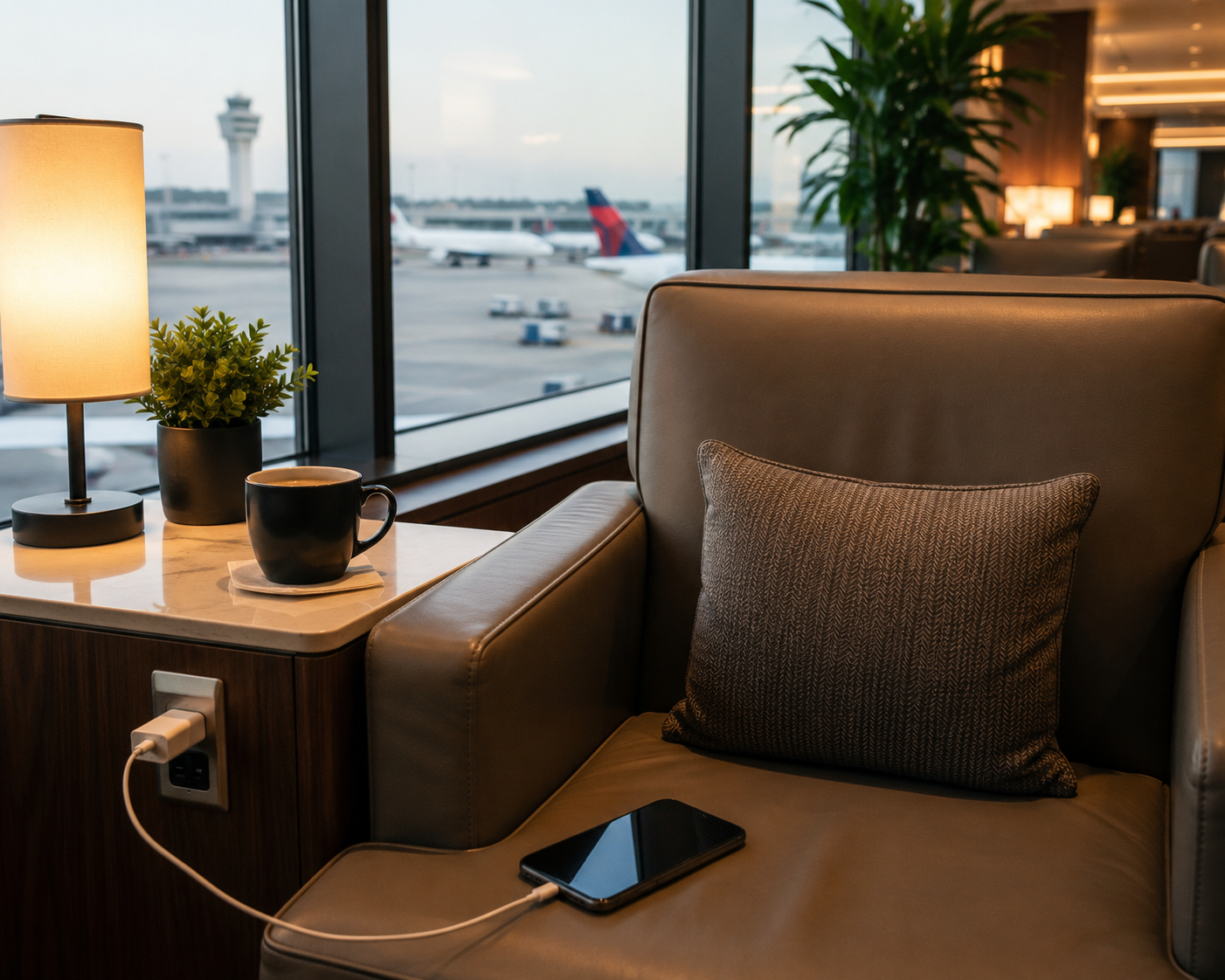
After confirming your gate, identify your ideal waiting location.
This may not be at the gate itself.
Your basecamp should include as many of these features as possible:
- Comfortable seating
- Access to power outlets
- Nearby restrooms
- Food and beverage options
- Natural light, if available
- Lower foot traffic
Many airports have hidden seating areas just beyond the main gate clusters that remain largely unused.
A five-minute walk can dramatically improve your airport experience.
Step 4: Create a Return Trigger (1 Minute)
Before leaving your basecamp, establish a non-negotiable return time.
A good rule:
- Domestic flights: Return to the gate 30 minutes before boarding.
- International flights: Return 45 minutes before boarding.
Set an alarm on your phone.
This simple habit eliminates the "Did they already board?" anxiety that plagues many travelers.
Step 5: Identify Your Upgrade Opportunities (6 Minutes)
With logistics complete, use any remaining time strategically.
Ask yourself:
- Does this airport have a lounge I can access through a credit card benefit?
- Are there empty premium seats available in the airline app?
- Is there a better seat available?
- Does the airline app offer paid or complimentary upgrades?
- Are standby opportunities available?
Many travelers miss valuable upgrades simply because they never check.
Airport time is opportunity time.
The Hidden Benefit: Reduced Decision Fatigue
Travel requires hundreds of micro-decisions.
- Where should we eat?
- Do we have enough time?
- Where's the gate?
- Where can we charge our phones?
A system removes these decisions.
Once your Airport Intelligence System is complete, you can relax, enjoy a meal, work, visit a lounge, or simply people-watch - knowing that every critical variable has already been addressed.
Because the goal of travel isn't simply to arrive.
It's to arrive feeling calm, prepared, and in control.
And that begins long before boarding.
The Tailored Traveler Rule
Never sit down until you've completed your Airport Intelligence Loop.
Fifteen minutes of preparation can save hours of frustration.